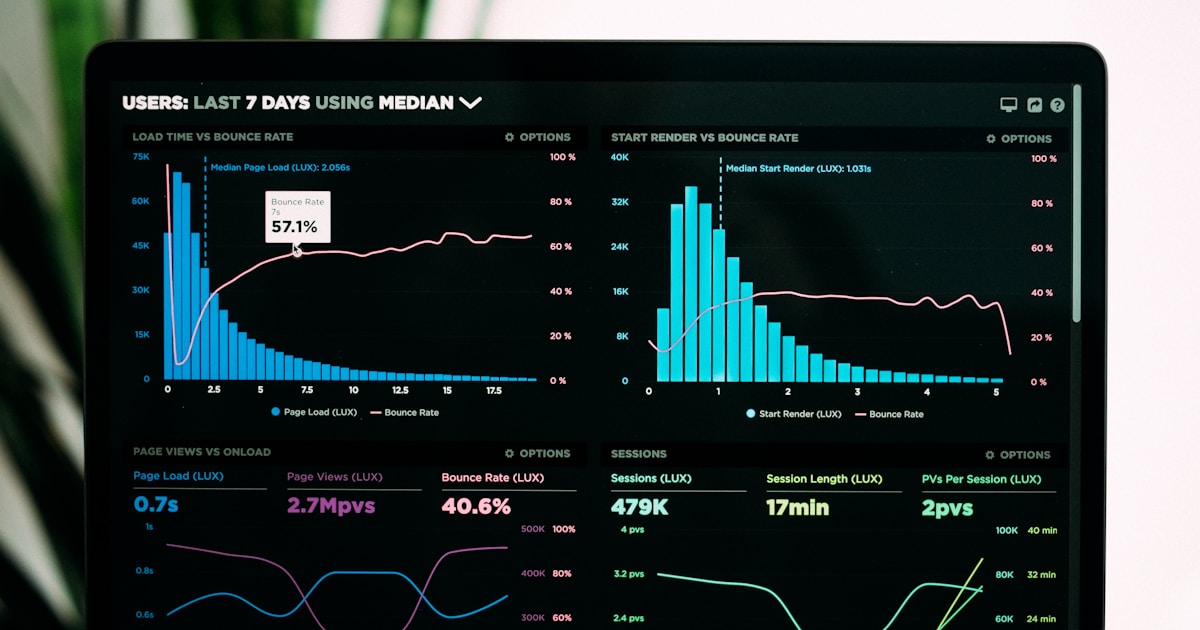
Hivel does a lot right. It covers DORA and SPACE, surfaces pull request bottlenecks, supports GitHub, GitLab and Bitbucket, and its Investment Profile merges Jira and Git data to show where engineering effort is actually going. For a team whose main question is what are we spending our time on, that is a well-aimed product.
But teams evaluating Hivel alternatives usually arrive with one of three problems: the plan is pitched at organisations of 20 to 200 developers, which a smaller team sits below; the investment reporting answers a leadership question rather than a daily one; or they have adopted coding agents and found that a platform which reads pull requests cannot help with what happens before one is opened.
This guide covers seven alternatives and, more usefully, how to work out which of those three problems is actually yours.
#Table of Contents
- Why teams look beyond Hivel
- What to look for in a Hivel alternative
- 7 best Hivel alternatives
- How pricing compares
- Choosing by what you are trying to fix
- FAQ
#Why teams look beyond Hivel
#1. It is built for a bigger organisation than yours
Hivel publishes its Growth plan — $20 per developer per month billed annually, $25 monthly — and pitches it at engineering organisations of 20 to 200 developers, with a custom-priced Enterprise plan above that. The price is fair and easy to read. The question for a 10-person team is whether a product shaped around investment reporting across that many developers is shaped for them.
#2. Investment reporting is a leadership question
The Investment Profile is Hivel's strongest differentiator, and it is genuinely useful — for the person presenting to a board. It is much less useful to the engineer deciding how to split a change on a Tuesday afternoon. If you bought the platform to change how the team works day to day and only leadership ever opens it, that is a mismatch worth naming.
#3. It stops where the pull request starts
This is the honest limitation of the whole category, Hivel included. It reads what your team has already done and reports on it. Everything after that — noticing the pattern, raising it, getting the behaviour to change — is a human process running on weekly or monthly cycles.
#4. The bottleneck moved
When humans wrote all the code, "review is slow" was a scheduling problem and a dashboard helped you see it. Now that agents write a large share of it, the constraint is different: code arrives faster than a team can meaningfully review it, and the useful intervention is upstream of the pull request rather than a chart about it.
#What to look for in a Hivel alternative
Decide who the tool is for. A platform bought for leadership reporting and a platform bought to change daily engineering behaviour are different products. Most teams need the second and buy the first.
Insist on a real trial. Not a demo of someone else's data — your repositories, your history, your numbers. If a vendor cannot let you do that in an afternoon, that tells you something about the setup cost.
Check the provider list. Hivel's GitHub, GitLab and Bitbucket coverage is genuinely broad. Several alternatives are GitHub-only, which is a hard blocker if you are not.
Ask where it plugs into the coding agent. If your engineers run Claude Code, Cursor, Codex or Copilot, the tool that can reach into that loop is doing something the others structurally cannot.
#7 best Hivel alternatives
#1. Coderbuds – Best for teams using coding agents
Website: coderbuds.com
Why it's a strong alternative: Coderbuds covers the same delivery ground — DORA, pull request analytics, team health, GitHub and Bitbucket — at a published $29 per active developer per month, with no minimum. The difference is where it acts. Hivel reports on the pull request. Coderbuds pushes your team's standards into the agent writing it, so an oversized or off-pattern change gets caught before the pull request exists.
What sets it apart:
- Your standards inside the coding agent – Connect Claude Code, Cursor, Codex or Copilot over MCP and it checks a change against how your team actually ships, before the pull request is opened
- An agent in Slack – Review follow-ups, deploy alerts and weekly reports where the team already is, rather than one more dashboard to remember
- DORA and SPACE together – The same framework coverage Hivel offers, from Google's DevOps research and Microsoft Research
- GitHub and Bitbucket – Not locked to one provider
- Five-minute setup – Connect a repository and your recent history is imported for you
- $29/developer/month – Published, per active developer, no minimum and no quote required
Perfect for: Teams of 5–50 engineers adopting coding agents who want the delivery picture and something that acts on it.
Where Hivel might still win: If Jira-based investment reporting is the specific thing you are buying, or you need GitLab support today.
#2. Swarmia – Best for a curated, opinionated dashboard
Website: swarmia.com
Why it's a strong alternative: Swarmia publishes its pricing and offers a free tier for smaller companies, which removes the evaluation friction that sends most people looking past Hivel in the first place. It is deliberately opinionated: fewer metrics, better chosen.
Best for: GitHub-centric teams who want a well-designed product they can try before buying.
Trade-off: No Bitbucket or GitLab support.
#3. LinearB – Best for automating the review workflow
Website: linearb.io
Why it's a strong alternative: If your real problem is that review is slow and unowned, LinearB does more than measure it. Routing rules, policies and programmable gates change the workflow itself.
Best for: Teams who have already diagnosed the bottleneck and want automation.
Trade-off: The published Essentials plan has a 50-contributor minimum, and the configurability is a setup project in its own right.
#4. Waydev – Best for breadth of reporting
Website: waydev.co
Why it's a strong alternative: Waydev publishes a price — $29 per active contributor per month, billed annually, with a free tier capped at 10 repositories — and offers over 130 insights across productivity, quality, DevOps performance and team health, plus an AI adoption and ROI module.
Best for: Larger organisations with someone who owns the reporting.
Trade-off: At roughly three times Coderbuds' per-seat rate, the depth only pays back if somebody is genuinely working through it.
#5. Jellyfish – Best for board-level reporting
Website: jellyfish.co
Why it's a strong alternative: Jellyfish is the most complete answer to "where is engineering investment going", which is the same question Hivel's Investment Profile addresses, at considerably more depth.
Best for: Engineering organisations that report formally to a board.
Trade-off: No published pricing, and third-party marketplace data puts typical annual contracts in the tens of thousands.
#6. Haystack – Best for DORA and nothing else
Website: usehaystack.io
Why it's a strong alternative: Deliberately minimal: the four DORA metrics, bottleneck alerts, almost nothing to configure.
Best for: Small teams who want delivery numbers without a platform decision.
Trade-off: Very little depth beyond DORA. Most teams outgrow it.
#7. DX – Best for developer experience research, now part of Atlassian
Website: getdx.com
Why it's a strong alternative: DX combines surveys with workflow metadata, and its Core 4 framework is well regarded for measuring developer experience specifically.
Best for: Large organisations running a real developer experience programme.
Trade-off: Atlassian acquired DX for roughly $1 billion, so its roadmap now sits inside a much larger product strategy.
#How pricing compares
| Tool | Price on their website |
|---|---|
| Coderbuds | Published — $29/developer/month, no minimum |
| Hivel | Published — $20/developer/month billed annually ($25 monthly), pitched at 20–200 developers |
| Haystack | Published — $20/member/month |
| Waydev | Published — $29/contributor/month billed annually, plus a free tier capped at 10 repositories |
| LinearB | Published — $29/contributor/month, 50-contributor minimum |
| Swarmia | Published — $45/developer/month; free under 10 developers |
| Jellyfish | Not published |
| DX | Not published |
Each vendor's own pricing page, checked on 14 October 2026. Vendors change them; check before you buy.
#Choosing by what you are trying to fix
"We do not know where our time goes." Hivel is genuinely good at this, and Jellyfish is better at it. If this is the whole problem, you may not need to switch.
"We know what is wrong and nothing changes." A reporting platform will not fix this, however good the charts. Look at LinearB for workflow automation, or Coderbuds for standards enforced inside the agent and follow-ups in Slack.
"Evaluation is taking longer than the decision deserves." Swarmia or Coderbuds — both publish a price and both let you connect a repository the same afternoon.
"Our agents are outrunning our review process." This is the newest version of the problem and the one the category was not designed for. The tool has to reach the agent, not just the pull request.
#FAQ
#How much does Hivel cost?
Hivel's Growth plan is $20 per developer per month billed annually, or $25 monthly, for organisations of 20 to 200 developers. Enterprise, for 200 or more, is quoted.
#Does Hivel support Bitbucket?
Yes. Hivel supports GitHub, GitLab and Bitbucket, which is broader coverage than several alternatives in this list — Swarmia and Haystack are more GitHub-centric.
#Is Hivel or Coderbuds better for a 20-person team?
They optimise for different buyers. Hivel is strongest if your primary question is investment allocation and you run planning in Jira. Coderbuds is strongest if you want the delivery picture and something that acts on it — standards inside the coding agent, follow-ups in Slack — with the price published at $29 per developer per month and no minimum.
#Can we run both during evaluation?
Yes, and you should. None of these tools own your data; they read your Git and issue-tracker history. Running two in parallel for two to four weeks costs some setup time and answers the question properly.
#What should we actually test during a trial?
One thing: after two weeks, did anybody change what they did because of the tool? Not "did it produce accurate charts" — every platform here will. Whether it changed behaviour is the only difference that shows up in your delivery numbers a quarter later.
#Ready to compare on your own repositories?
Start your free 30-day trial · Try the live demo first — no account needed · See the price